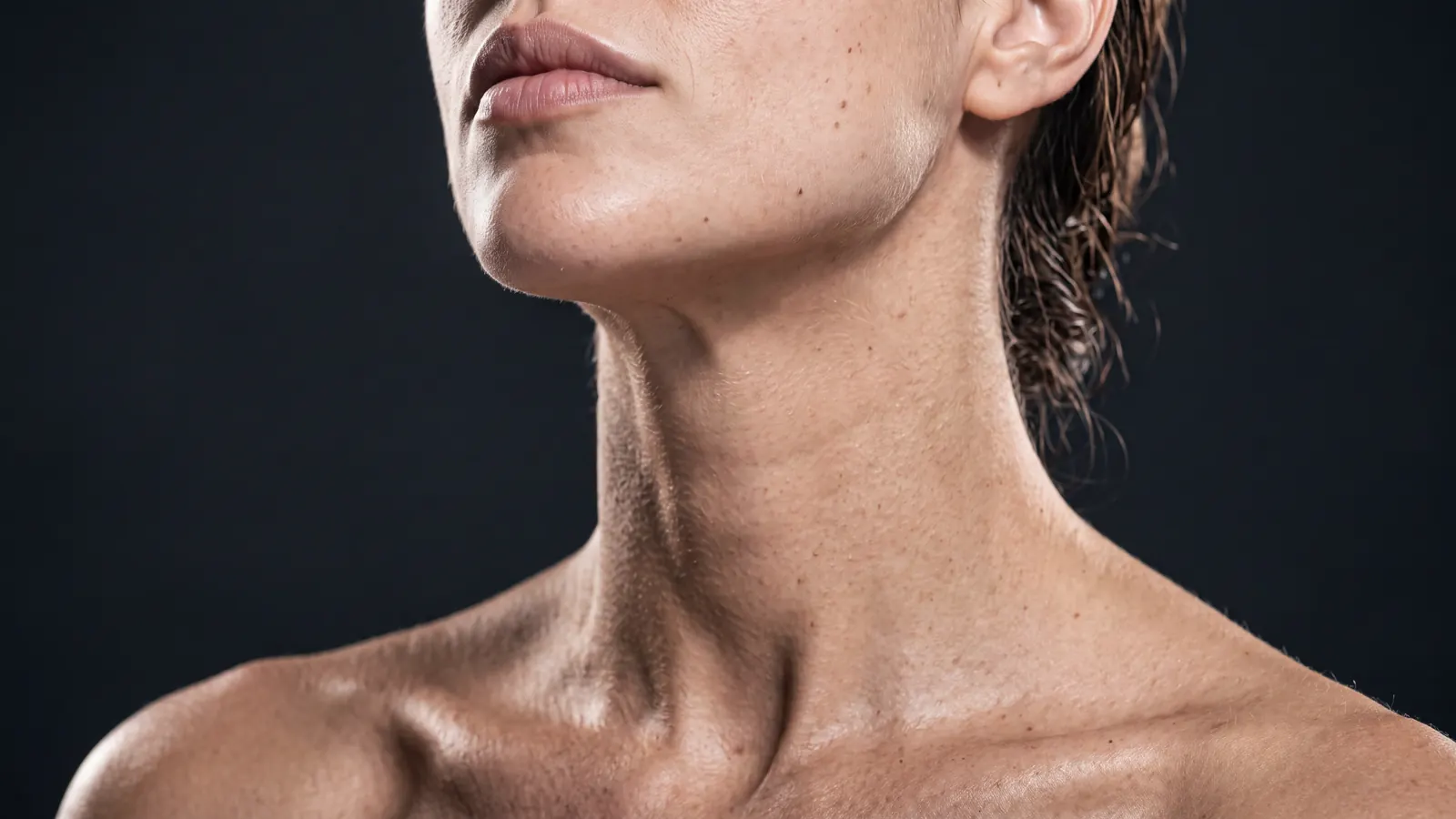
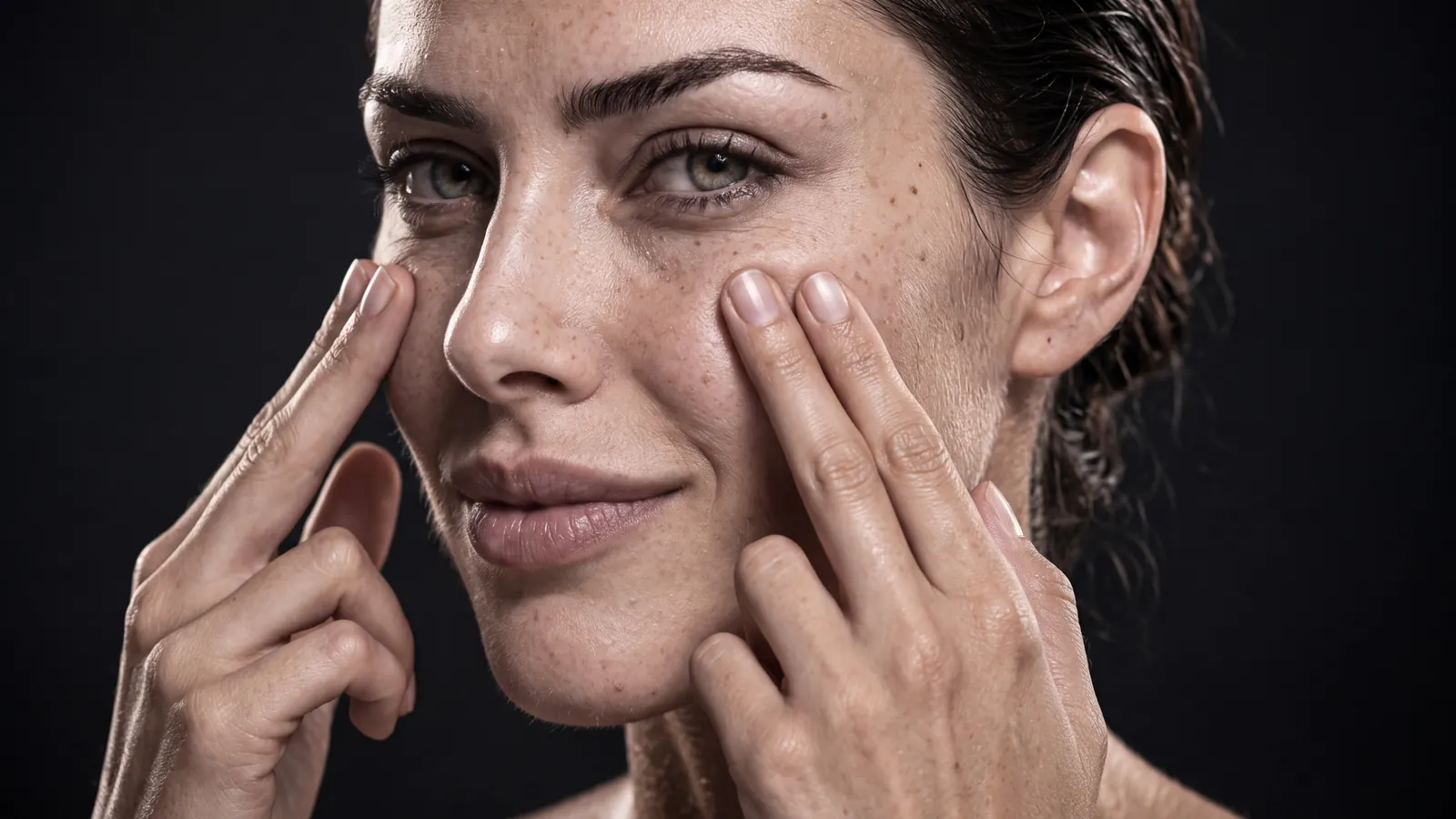
Puffy Face: Causes, a 5-Minute Depuff Routine, and When to Worry
Most facial puffiness is fluid that settles in overnight or after a short night or a night of drinking. Here's how to tell it from fat, a 5-minute depuff routine, and the signs that need a doctor.
On this page
A puffy face is usually fluid, not fat. Lying flat overnight, a short night, alcohol, allergies, crying and the days around a period all leave extra fluid in your face, and it's usually worst when you wake. It eases as the day goes on, and cold, light massage toward your neck and a raised pillow speed it along.
Swelling that comes on suddenly, hurts or sits on one side is a different matter, and so is swelling of the lips, tongue or throat. If you're struggling to breathe or swallow, call 911 or your local emergency number. The full list of red flags is at the end.
Whether you call it depuffing or debloating, here's what causes everyday puffiness, how to tell it from fat, a 5-minute routine, what "cortisol face" really means, and how facial lymphatic drainage works.
Why is my face puffy in the morning?
Because you've been lying down. During the day, fluid pools in your legs; lie flat for the night and it moves up toward your head and neck. That's normal overnight fluid retention, and too little or too much sleep, alcohol, allergies and crying make it more noticeable. Once you're upright and moving, it drains back down.
A sleep-lab study captured the shift: overnight, fluid left the legs, and the more it moved, the more neck circumference grew (Redolfi 2009). Cleveland Clinic describes morning puffiness as normal overnight fluid retention that's more pronounced with too much or too little sleep (Cleveland Clinic).
Here's what each common trigger does:
Lying flat overnight
- What happens
- Fluid moves from your legs toward your neck and face (Redolfi 2009)
A short night
- What happens
- After a night without sleep, people were rated as having more swollen eyes and more hanging eyelids (Sundelin 2013)
Alcohol
- What happens
- Women who had eight or more drinks a week reported more under-eye puffiness (Goodman 2019)
Allergies
- What happens
- Allergic reactions, including hay fever, make the face swell (Cleveland Clinic)
Your period
- What happens
- Fluid retention peaks on the first day of the period (White 2011)
Some medicines
- What happens
- Prednisone, for example, makes the face swell in some people (Cleveland Clinic)
What about puffy eyes?
Puffy eyes follow the same rules: short nights, drinks and allergies all show up around the eyes. For a quick fix, hold a cold compress over your closed eyes for a minute, then sweep your ring fingers lightly from the inner corner out to the temple and down in front of the ear.
Bags that look the same every day are a separate story: fluid is one of several causes, alongside fat that bulges forward and a hollow tear trough (Goldberg 2005). Our article on hunter eyes covers what shapes the eye area. Puffy eyelids that come with foamy urine or swollen ankles need a doctor; see the table at the end.
Puffy or fat? How to tell
Watch the clock. Fluid swings within hours, so a face that's puffiest on waking and slimmer by lunch is holding fluid. Fat changes over weeks and looks the same morning and night. Puffiness gathers around the eyes and cheeks, while fat tracks your overall weight and shows under the chin, along the jaw and in the cheeks.
Fluid or fat?
Tap the side that sounds like you.
Timing
Where
Triggers
Then run the two-photo test:
- Take a photo within 10 minutes of waking: same spot, facing a window, phone at the same distance, neutral face.
- Take a second photo two hours later with the same setup.
- Compare them. The difference you see is fluid. Repeat after a short night or a night out to learn your triggers.
If both photos look the same and your face has filled out over months, read how to lose face fat instead.
How to depuff your face in 5 minutes
Cool your skin, then use very light strokes in the direction lymph drains, starting at your neck. Add a minute of face and neck movement and finish where you started. The whole routine takes five minutes and moves fluid out of your face toward the lymph nodes in your neck. Skip any step that hurts.
Lymph from your face drains to nodes in front of your ears and under your jaw and chin, then down chains of nodes along your neck, rejoining the bloodstream at its base (TeachMeAnatomy). Lymphatic drainage starts at the center and works outward, so you clear the neck first and then sweep the face toward it (Marxen 2023). The vessels sit just under the skin, so use the weight of your fingertips and nothing more (Cleveland Clinic).
- Cool down (1 minute). Splash your face with cool water or hold a cold, clean compress over your cheeks and closed eyes. Cold reduces swelling (Cleveland Clinic).
- Open the neck (30 seconds). Rest your fingertips just below your ears and make 10 slow, light circles that move the skin down toward your collarbones.
- Sculpting Sweep (1 minute). Glide from the center of your chin along your jaw to just below your ears, 10 times.
- Cheeks and under-eyes (1 minute). Glide from beside your nose out across your cheeks to just in front of your ears, 5 times. Then sweep your ring fingers lightly under each eye, from the inner corner out to the temple and down in front of the ear, 5 times. Don't press on the eye itself.
- Move (1 minute). Do 10 slow Cheek Lifts, the core move in our high cheekbones article: fingertips resting on your cheekbones, a wide smile, forehead relaxed, jaw loose. Then sit tall and lower your shoulders away from your ears for five slow breaths. The squeeze of working muscles pushes lymph along its vessels (Cleveland Clinic).
- Finish at the neck (30 seconds). Repeat step 2.
Tonight, add a pillow: keeping your head raised reduces fluid buildup in your face (Cleveland Clinic).

- In front of the earParotid nodes
- Under the jawSubmandibular nodes
- Under the chinSubmental nodes
- Along the side of the neckDeep cervical nodes
- Base of the neckWhere lymph rejoins the bloodstream
Lymph nodesA light stroke; numbers match the routine’s steps
Sculpting Sweep
- With clean fingertips, start at the center of your chin.
- Glide lightly along your jaw to just below your ears.
- Glide, don't tug. Skip broken, inflamed or recently treated skin.
Fullness under your chin that looks the same all day is more likely fat or skin than fluid; our article on double chin exercises covers that side.
Optional: Jaw Release. If you wake with a tight jaw, finish with 30 seconds of Jaw Release. Night-time grinding, which affects 8 to 10% of adults, can leave the jaw sore in the morning (Lal 2024).
Jaw Release
- Rest your fingertips on both jaw muscles, where they bulge when you clench.
- Trace small, gentle circles.
- Stop if you feel jaw pain, worsening clicking or dizziness.
Want more than a depuff? Our face exercise routine works the muscles that shape your face.
How to prevent facial puffiness
Sleep seven or more hours, raise your head slightly at night, go easy on alcohol, treat allergies, and drink to thirst. Watch how salty dinners show up the next morning. A little morning fullness is normal; these habits keep it small and short-lived.
- Sleep. Adults need seven or more hours a night (CDC), and short nights show up as swollen eyes.
- Pillow height. An extra pillow keeps fluid from settling in your face overnight.
- Alcohol. Heavier drinking goes with more under-eye puffiness, so cut back before mornings that matter.
- Allergies. If your eyes are itchy and puffy in allergy season, ask a pharmacist or doctor about treatment, and try not to rub them.
- Salt. Very high salt intake raises the volume of fluid in your bloodstream, by 315 ml at the highest dose in a metabolic-ward study (Heer 2000). Run the two-photo test after your saltiest dinners to see how your face responds.
- Your cycle. Fluid retention peaks on the first day of a period, so expect a fuller face around then and lean on the routine.
Does drinking water help a puffy face?
Drinking to thirst is all your face needs. Your body balances its own water: when people ate more salt over months, their bodies conserved water and they drank less (Rakova 2017). Extra glasses won't flush puffiness away; cold, time upright and the routine above do the depuffing.
What is "cortisol face"?
"Cortisol face" isn't a medical diagnosis. It's a social media label for a puffy, rounded face blamed on stress, and everyday stress alone is unlikely to cause it. A truly round "moon face" comes from long-term high cortisol, which is Cushing's syndrome. It's most often caused by steroid medicines, and it arrives with other signs.
Ohio State endocrinologist Luma Ghalib, MD, says there's no medical condition called cortisol face, and that simple stress alone is unlikely to change the face this way (Ohio State). The medical terms are moon facies, a round face from fat building up, and facial plethora, a flushed, swollen look (CU Anschutz). Moon face is fat, not fluid, so massage doesn't move it.
Cushing's syndrome is mainly caused by steroid medicines, whether pills, injections, inhalers or creams; tumors that make too much cortisol are very rare. Endocrinologists look for several signs together, not a round face alone (CU Anschutz; Ohio State):
- weight gain in the belly and face, with thinner arms and legs
- a fatty hump between the shoulders
- wide purple stretch marks and skin that bruises easily
- muscle weakness and fatigue
- high blood pressure or high blood sugar
If your face has changed over time along with several of these, or you take steroids long term, see your doctor. Don't stop a steroid on your own; talk to your doctor first (NHS).
If "cortisol face" means ordinary morning puffiness to you, that's fluid, and the routine and habits above are the right tools.
Does facial lymphatic drainage work?
Yes, for puffiness. Light strokes toward your neck move fluid out of the face, and massage tools measurably change it: a facial roller raised cheek blood flow for at least 10 minutes, and eight weeks of gua sha or rolling reduced facial contour measurements by 2.23 to 3.26 mm. It moves fluid; it isn't a fat or detox treatment.
2.75–3.26 mmsmaller facial contour measurements after 8 weeks with a facial roller
2.23–2.40 mmsmaller facial contour measurements after 8 weeks of gua sha
10+ minof raised cheek blood flow after 5 minutes of rolling
- Rollers. Five minutes with a facial roller raised blood flow in the rolled cheek for at least 10 minutes, and five weeks of daily rolling improved how the skin's blood vessels respond to warmth (Miyaji 2018).
- Gua sha and rollers. In a randomized trial, 34 women used one of the tools for 10 minutes, five times a week. After eight weeks, contour measurements fell by 2.23 to 2.40 mm with gua sha and 2.75 to 3.26 mm with the roller, and the roller also improved skin elasticity (Ahn 2025).
- Calm. A 45-minute facial massage lowered anxiety and negative mood in healthy women (Hatayama 2008).
- Swelling after surgery. After jaw surgery, lymphatic drainage made measured facial swelling go down faster (Yaedú 2017).
Korean-style face massage and gua sha use the same light, outward strokes, so the routine above is your foundation. Keep the pressure gentle, make it daily, and let the two-photo test show you the change.
When puffiness needs a doctor
See a doctor if swelling comes on suddenly, sits on one side, hurts, comes with a fever or toothache, or keeps coming back without an obvious cause. Call 911 if your lips, tongue or throat swell or you struggle to breathe or swallow, or if one side of your face suddenly droops.
For everything else, this table shows what a symptom can point to and what to do. Only a clinician can tell what's behind it.
| What you notice | What it can point to | What to do |
|---|---|---|
| Swelling on one side with a toothache, a swollen jaw or a fever | A dental abscess or another infection | See a dentist urgently; go to the ER if it's hard to breathe, swallow or open your mouth, or your eye swells |
| Warm, red, tender swelling, or swelling with a fever | A skin infection such as cellulitis | Call your doctor promptly |
| Puffy eyelids with foamy urine, swollen ankles or weight gain from fluid | A kidney problem such as nephrotic syndrome | See a doctor soon |
| A puffy face with tiredness, feeling cold, weight gain or dry skin | An underactive thyroid | Ask a doctor about a blood test |
| A face that has rounded over time with stretch marks, easy bruising or high blood pressure, or long-term steroid use | High cortisol (Cushing's syndrome) | See a doctor, and don't stop steroids on your own |
| Sudden swelling of the face, hands or feet in pregnancy or soon after birth, especially with a headache or vision changes | Preeclampsia | Contact your maternity unit or doctor now |
| Swelling of the lips or eyelids after starting a blood pressure medicine | Angioedema from an ACE inhibitor | Get urgent advice; call 911 if your tongue or throat swells |
Sources for this table: the NHS on dental abscess, pre-eclampsia and angioedema; the NIDDK on nephrotic syndrome; MedlinePlus on hypothyroidism; and Cleveland Clinic on facial swelling.
Frequently asked questions
How long does facial puffiness last?
Morning puffiness fades as the day goes on once you're upright, and puffiness from a short night or a night of drinking settles after a good night's sleep. Swelling that lasts for days, keeps coming back, sits on one side, hurts or comes with other symptoms is different: see a doctor.
What vitamin gets rid of a puffy face?
No vitamin depuffs a face. Puffiness is fluid, and fluid responds to sleep, less alcohol, cold and gentle massage toward your neck. If puffiness comes with tiredness, feeling cold, weight gain and dry skin, ask a doctor about a thyroid blood test, because an underactive thyroid can puff up the face.
Why is my face puffy after drinking?
Alcohol shows up in the face. In a survey of 3,267 women, those who had eight or more drinks a week reported more under-eye puffiness. The morning after, a cold compress, time upright and the 5-minute routine help; over weeks, fewer drinks keep your face less puffy.
Does lymphatic drainage slim your face permanently?
It slims puffiness, not fat or bone. Light strokes move fluid out of the face toward the lymph nodes in your neck, and in a randomized trial, eight weeks of gua sha or a facial roller reduced facial contour measurements by 2.23 to 3.26 mm. Make it a daily habit; it isn't a detox.
Why is my face so puffy but I'm skinny?
Because puffiness is fluid, and lean people hold fluid too. Lying flat overnight, a short night, alcohol, allergies and the days around a period can all puff up a slim face. If your face looks full all day, every day, bone structure, buccal fat or age are the more likely reasons.
How do I depuff my jawline?
Start at your neck, then glide your fingertips lightly from the center of your chin along your jaw to just below your ears, ten times. Add a cold compress and some time upright. If fullness under the jaw looks the same all day, it's more likely fat or skin than fluid, and massage won't change it.
Sources
- Cleveland Clinic. Facial swelling: causes and treatment. Reviewed August 15, 2024. Morning puffiness as normal overnight fluid retention; cold compresses, head elevation, causes and when to get care.
- Redolfi S, et al. Relationship between overnight rostral fluid shift and obstructive sleep apnea in nonobese men. American Journal of Respiratory and Critical Care Medicine, 2009. Overnight, fluid left the legs and neck circumference rose with it.
- Sundelin T, et al. Cues of fatigue: effects of sleep deprivation on facial appearance. Sleep, 2013. After 31 hours awake, people were rated as having more swollen eyes and more hanging eyelids.
- Goodman GD, et al. Impact of smoking and alcohol use on facial aging in women: results of a large multinational, multiracial, cross-sectional survey. Journal of Clinical and Aesthetic Dermatology, 2019. 3,267 women: eight or more drinks a week went with more under-eye puffiness.
- White CP, et al. Fluid retention over the menstrual cycle: 1-year data from the prospective ovulation cohort. Obstetrics and Gynecology International, 2011. 62 women, 765 cycles: fluid retention peaked on the first day of the period.
- Ahn SH, et al. Comparative effects of facial roller and gua sha massage on facial contour, muscle tone, and skin elasticity: randomized controlled trial. Journal of Cosmetic Dermatology, 2025. 34 women, 8 weeks: contour measurements fell 2.23–2.40 mm with gua sha and 2.75–3.26 mm with a roller.
- Miyaji A, Sugimori K, Hayashi N. Short- and long-term effects of using a facial massage roller on facial skin blood flow and vascular reactivity. Complementary Therapies in Medicine, 2018. Five minutes of rolling raised cheek blood flow for at least 10 minutes.
- Yaedú RYF, et al. Postoperative orthognathic surgery edema assessment with and without manual lymphatic drainage. Journal of Craniofacial Surgery, 2017. After jaw surgery, measured facial swelling went down faster with lymphatic drainage.
- Marxen T, et al. The utility of lymphatic massage in cosmetic procedures. Aesthetic Surgery Journal Open Forum, 2023. Review of manual lymphatic drainage: treatment starts centrally and works outward.
- Ohio State Health & Discovery. Is 'cortisol face' a real thing? September 9, 2024. Endocrinologist Luma Ghalib, MD: not a medical condition; a rounder face comes from sustained high cortisol.
- University of Colorado Anschutz. Do you think you have a 'cortisol face'? What you should know about this TikTok trend. November 25, 2024. Endocrinologist Christie Turin More, MD, on moon facies, steroid medicines and the signs of Cushing's syndrome.
- NHS. Angioedema. Reviewed August 25, 2026. Symptoms, causes including ACE inhibitors, and when to call emergency services.
This article is educational and is not medical advice.