High Cheekbones: How to Tell If You Have Them (and How to Make Them Show)
Visible cheekbones come from bone, soft tissue and light. Find out where yours sit, why they might not show, and which parts you can change without surgery.
On this page
High cheekbones are cheekbones whose most prominent point sits close under your eyes, so light catches the top of the bone and a shadow falls in the hollow below. Bone sets that position. How much your cheekbones show depends on the fat and muscle over the bone and the light that hits it, and those you can change.
Think of it as bone plus soft tissue plus light. This article gives you a 30-second test, explains what each layer does, and walks through the natural levers worth pulling, including a step-by-step Cheek Lift.
High vs low cheekbones
High cheekbones peak close under the eyes, leaving a visible hollow below them. Low cheekbones peak lower, nearer the level of your nostrils, with fuller cheeks underneath. Neither is better, and the same bone can look high or low depending on the fat over it and the light on it.
High or low? Check yours
Tap the side that sounds like you.
Most prominent point
Below the bone
Overall impression
Which looks better is mostly a matter of taste. We'll get to what the research says below.
How to tell if you have high cheekbones
Use a mirror, an overhead light and your fingertips. Find the most prominent point of your cheekbone, then check whether it sits closer to your lower eyelid or to the bottom of your nose. Closer to the eye reads as high; closer to the nose, as low.
The 30-second test:
- Stand under a ceiling light and face a mirror, with your face relaxed.
- Look for the shadow. A hollow under the cheekbone shows where the bone's lower edge runs.
- Place two fingertips just below the outer corner of one eye and slide them down until you feel the most prominent point of the bone.
- Compare its height with your lower eyelid and the bottom of your nose.
- Check the other side.
If one side sits a little higher, you're in good company: see why uneven cheeks are so common.
What causes higher cheekbones? Mostly the shape and position of your cheekbone and upper jaw, which are largely inherited and set as you grow. Everything else in this article changes how much of that bone you see.
What makes cheekbones look high: bone, fat, muscle and light
What you see as a cheekbone is several layers stacked together. Only one of them is fixed.
Bone
The cheekbone (zygomatic bone) and the upper jaw under it set the frame. Their shape is set as you grow, so the work you do happens in the layers on top.
Bone does change with age, though. Parts of the midface skeleton, especially the upper jaw and sections of the eye-socket rim, gradually resorb, which is one reason the midface flattens over time.
Fat
Your cheek isn't one block of fat. Dissections show that what's often called malar fat is really three separate compartments, with a deeper pad near the nose that projects the cheek forward. With age, the deep cheek fat loses volume and the compartments drift downward, changing the contour over the bone.
Below the cheekbone sits the buccal fat pad, a separate, deeper pad that fills spaces deep in your cheek and lets your chewing and expression muscles glide as they work. Its volume can change through life.
Body fat shows up here too. People can reliably estimate body weight from a face, partly from how wide the cheeks are relative to the jaw.
Muscle
The zygomaticus major runs from the cheekbone to the corner of your mouth, and it's the main muscle that pulls the corners of your mouth up when you smile. Our article on the zygomaticus muscles and their neighbors shows where it sits.
This muscle shapes your upper cheeks. In an ultrasound study of 220 women aged 20 to 79, the zygomaticus major was thinner in older women, and a thinner muscle went with flatter upper cheeks. It's the muscle Cheek Lift trains.
Light
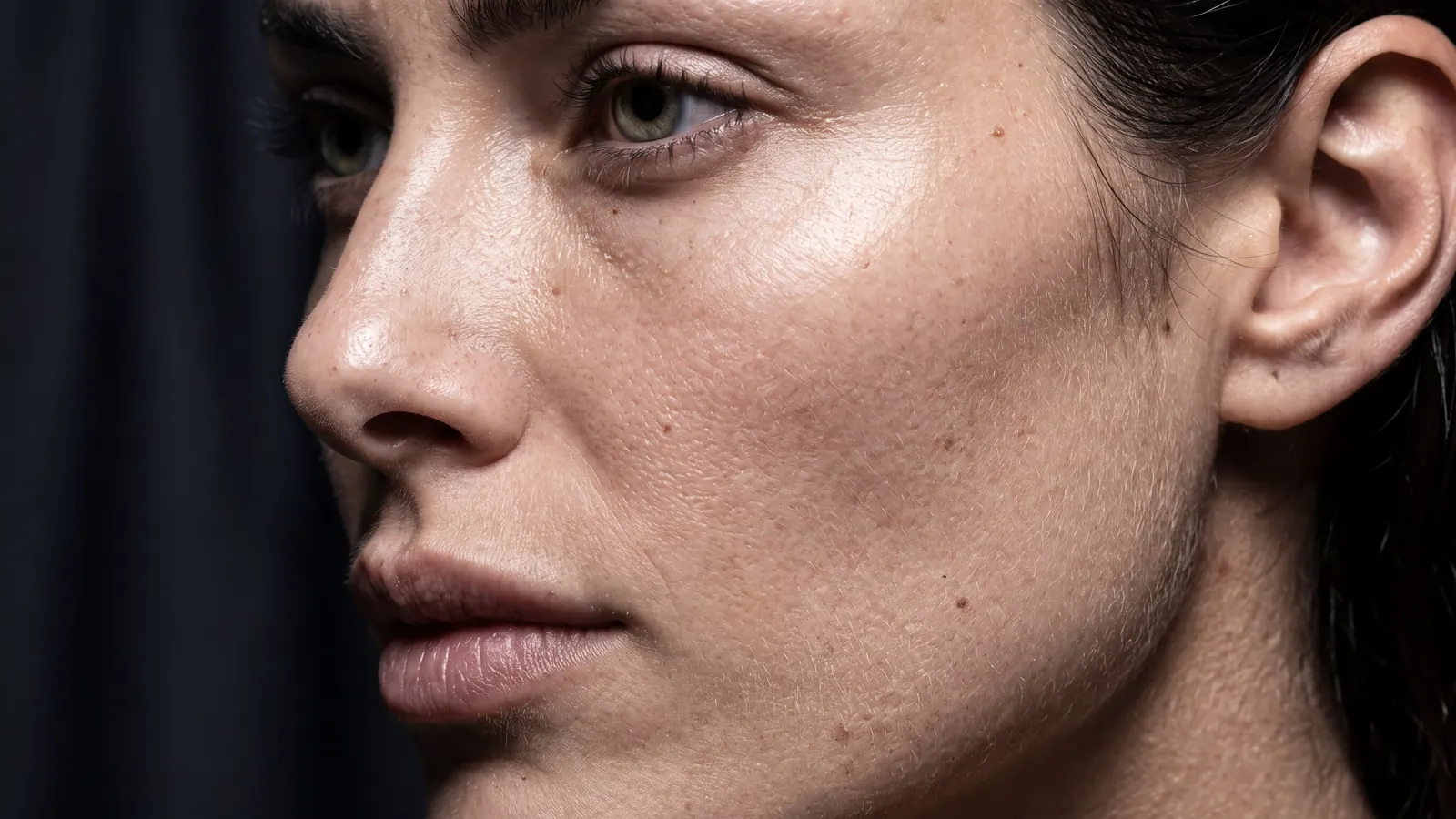
Cheekbones are partly a lighting effect. Light from above and slightly to the side catches the top of the bone and drops a shadow into the hollow below. Flat light from straight ahead, like a phone flash or a ring light, fills that shadow in, which is why the same cheekbones can vanish in one photo and look sharp in the next.
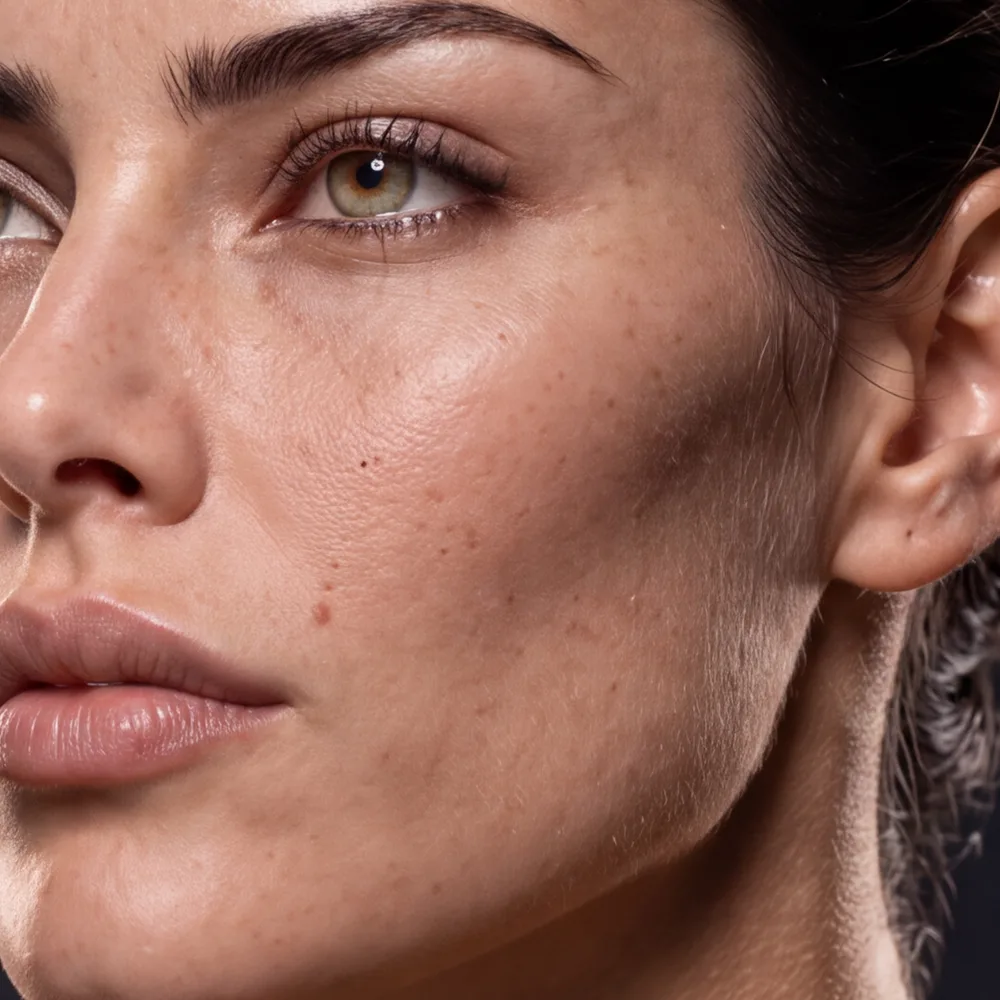
- Cheekbone (zygomatic bone)The fixed frame that sets where the cheek’s high point sits
- Zygomaticus majorThe smile muscle Cheek Lift trains, from the cheekbone to the mouth corner
- Cheek fat compartmentsSeparate pads over the cheekbone that drift down with age
- Buccal fat padFills the hollow below the bone
- HighlightLight catches the top of the cheekbone
- ShadowFalls in the hollow just below it
Are high cheekbones attractive?
Yes, as part of the whole face. Faces that are close to average, symmetrical and typical of their sex are rated attractive across cultures, and cheekbones help shape all three. In a ranking study of 922 people, eyebrows and jaw carried even more weight, so cheekbones look best alongside full brows and a defined jaw.
The big picture comes from decades of research: averageness, symmetry and sex-typical features are attractive in both male and female faces and across cultures. Cheekbone prominence is one of the shape features that differ on average between men's and women's faces.
When researchers asked 922 people to rank faces that varied in five features, eyebrow thickness and jaw prominence mattered more to attractiveness than cheekbone prominence or eye size.
How far forward your cheekbones sit matters too. When researchers moved cheekbones forward or back by 4 mm in 3D face scans, dental students rated neutral and forward-set cheekbones as more attractive than set-back ones.
Do high cheekbones age better?
They give your face more support as it ages. The cheek's fat and skin drape over the bone, and everyone's midface changes with time as bone resorbs and fat shifts downward, so a strong frame underneath helps. Some fullness helps too: in 186 pairs of identical twins, a higher BMI made faces look older before 40 but younger after 40.
How to get higher-looking cheekbones naturally
You can't raise the bone, but you can make it show. Five levers work on the layers around it: lose excess body fat if you have it, train the smile muscle with Cheek Lift, reduce puffiness, use light and angles, and frame the area. The first two take months. The last two work today.
- Lose excess body fat, if you have it. Faces carry weight cues, so overall fat loss sharpens the cheeks. Fat comes off the whole body at once: six weeks of ab exercises didn't reduce belly fat in a randomized trial, so pair your face routine with overall fat loss. Our article on how to lose face fat covers what works.
- Train the muscle under your cheek. Cheek Lift works the zygomaticus major, the smile muscle that runs across your cheek and shapes the area over the bone.
- Reduce puffiness. After a night without sleep, people's faces were rated as having more swollen eyes and droopier mouth corners. Puffiness blurs the edge between bone and hollow, so see what helps puffy cheeks.
- Use light and angles. Face a light that's above you and slightly to one side, keep your chin level, and turn a little toward a three-quarter view, where the cheekbone forms the outline of your face. It's the quickest win, and it works in every photo.
- Frame the area. Pull your hair back from your cheeks. Contour a shade darker in the hollow below the bone and highlight its top, copying the pattern light makes. Brows count too: in the ranking study above, eyebrow thickness mattered more than cheekbones.
Cheek Lift, step by step
Cheek Lift is a held, deliberate smile with your fingertips resting on your cheekbones. It works the zygomaticus major, the main smile muscle running across your cheek. Three slow repetitions take under a minute.
Cheek Lift
- Rest your fingertips lightly on both cheekbones.
- Smile wide.
- Hold it there, and feel your cheek muscles working as your cheeks lift into your fingertips.
- Keep your forehead relaxed.
- Release the smile.
Three form cues matter most:
- Keep your jaw loose.
- Don't pull the skin. Your fingertips rest on the bone to feel the lift, not to make it.
- Keep the effort in your cheeks. If your forehead creases or your eyes squeeze shut, smile a little smaller.
Isn't this just smiling? Close, but not quite. You lift your cheeks on purpose, hold them there and keep your forehead and jaw out of it. That deliberate hold is what turns a smile into training.
Do it daily. To progress, hold a little longer or add a set rather than pressing harder with your fingertips: in strength training, progressive training and more weekly sets build more muscle. Trained muscle starts to grow measurably after about three to four weeks, and the Northwestern study measured its results at 8 and 20 weeks. Cheek Lift also fits into a longer face exercise routine.
To see your progress, take a photo every four weeks in the same spot, at the same time of day and in the same light: one relaxed, one mid-lift. Compare the relaxed photos, since that's how people usually see you.
Over the same 20 weeks, the women's average estimated age fell from 50.8 to 48.1 years.
Why don't my cheekbones show?
Usually because something sits over them, not because they're missing. The common reasons are body fat, a full buccal fat pad, puffiness, flat lighting and your bone structure, and with age, cheek fat shifts. Most of these you can change or work around.
- Body fat. If you carry extra weight, your face is one of the places it shows, and losing it overall is the main non-surgical fix.
- A full buccal fat pad. This deep pad below the cheekbone fills out the hollow. Surgically removing part of it makes the cheekbones more prominent, permanently.
- Puffiness. Short sleep and fluid soften the edge under the bone.
- Flat light. Diffuse light from all around, a front-facing flash or a ring light fills in the shadow that defines the bone.
- Bone structure. Some cheekbones sit lower or project less. Light, contour and filler work around it.
- Age. The deep cheek fat thins and the fat compartments drift down, changing the contour over the bone.
Fillers and implants, briefly
If you want more projection than soft tissue can give, the options are medical. Most filler treatments use hyaluronic acid, and a review of 18 studies of it in the cheeks found high satisfaction for up to 24 months, with bruising, swelling and tenderness that usually lasted no more than two weeks.
Filler is still a medical procedure. The FDA warns that injecting filler into a blood vessel can cause tissue death, vision problems including blindness, and stroke. It advises a licensed provider with dermatology or plastic surgery experience, and never buying filler online or using needle-free injection devices.
Cheek implants and buccal fat removal are surgery, and they're permanent. Talk to a board-certified plastic or facial plastic surgeon, ask how the result will look as your face ages, and get a second opinion.
Frequently asked questions
Can face exercises give you high cheekbones?
They work on the layer over the bone. Exercise trains the cheek muscles rather than the bone, and in a 20-week Northwestern study, facial exercise improved dermatologists' ratings of upper and lower cheek fullness. Fuller upper cheeks sit right over the cheekbone, where light catches, which gives the area over the bone more shape.
How long does it take for cheek exercises to work?
Give it a few months of daily practice. Trained muscle starts to grow measurably after about three to four weeks, and the Northwestern facial exercise study measured its results at 8 and 20 weeks, after 30-minute sessions, daily at first and then every other day. Take a photo in the same light each month to track your progress.
Do high cheekbones age better?
High, prominent cheekbones give the cheek's fat and skin more support to drape over. That support matters, because everyone's midface changes with age: parts of the bone resorb and the cheek fat shifts. Fullness helps too: in identical twins, a higher BMI made faces look younger after 40, so the leanest face isn't always the youngest-looking.
Will losing weight make my cheekbones show?
If you carry excess body fat, yes, because facial fat tracks body fat and people can reliably estimate weight from a face. Fat comes off the whole body rather than one spot, so pair overall fat loss with Cheek Lift for the muscle. If you're already lean, your bone and buccal fat set the limit.
Does buccal fat removal give you higher cheekbones?
It makes cheekbones look more prominent by removing fat from the hollow below them, while the bone itself stays the same. It's a permanent surgical procedure, so discuss it with a board-certified surgeon. Exercise works on muscle rather than on this deep fat pad, so the two do different jobs.
Do the same tips work for men?
Yes. Cheekbones are shaped by the same bone, fat, muscle and light in men and women, so the same levers apply. On male faces the jaw counts for even more: in a ranking study of 922 people, a prominent jaw was rated more attractive on men than on women, so give your jawline attention too.
Sources
- Alam M, et al. Association of facial exercise with the appearance of aging. JAMA Dermatology, 2018. 20 weeks of facial exercise; upper and lower cheek fullness improved.
- Seraj SS, et al. Efficacy of conservative techniques for mechanical facial rejuvenation: a systematic review. Aesthetic Surgery Journal Open Forum, 2025. 12 studies, 321 women; improvements in the cheeks, jawline and eye area.
- Rohrich RJ, Pessa JE. The fat compartments of the face: anatomy and clinical implications for cosmetic surgery. Plastic and Reconstructive Surgery, 2007. 30 cadaver dissections.
- Rohrich RJ, Pessa JE, Ristow B. The youthful cheek and the deep medial fat compartment. Plastic and Reconstructive Surgery, 2008. 14 cadaver dissections.
- Gierloff M, et al. Aging changes of the midfacial fat compartments: a computed tomographic study. Plastic and Reconstructive Surgery, 2012. CT scans of 12 cadaver heads.
- Oya M, et al. Structural characteristics of facial sagging: a quantitative analysis linking visual assessment to dermal, fat, and muscle properties. Journal of Cosmetic Dermatology, 2026. Ultrasound of 220 women aged 20 to 79.
- Mendelson B, Wong CH. Changes in the facial skeleton with aging: implications and clinical applications in facial rejuvenation. Aesthetic Plastic Surgery, 2012. How the facial skeleton changes with age.
- de Jager S, Coetzee N, Coetzee V. Facial adiposity, attractiveness, and health: a review. Frontiers in Psychology, 2018. Includes a meta-analysis: perceived facial fat tracked BMI (r = 0.71, n = 458).
- Mogilski JK, Welling LLM. The relative contribution of jawbone and cheekbone prominence, eyebrow thickness, eye size, and face length to evaluations of facial masculinity and attractiveness. Frontiers in Psychology, 2018. 922 participants ranked faces.
- Trinh LN, Gupta A. Hyaluronic acid fillers for midface augmentation: a systematic review. Facial Plastic Surgery, 2021. 18 studies of seven hyaluronic acid fillers.
- US Food and Drug Administration. Dermal fillers (soft tissue fillers). Safety information; content current as of July 6, 2023.
- Davis B, Serra M. Buccal fat pad reduction. StatPearls, 2022.
This article is educational and is not medical advice.